
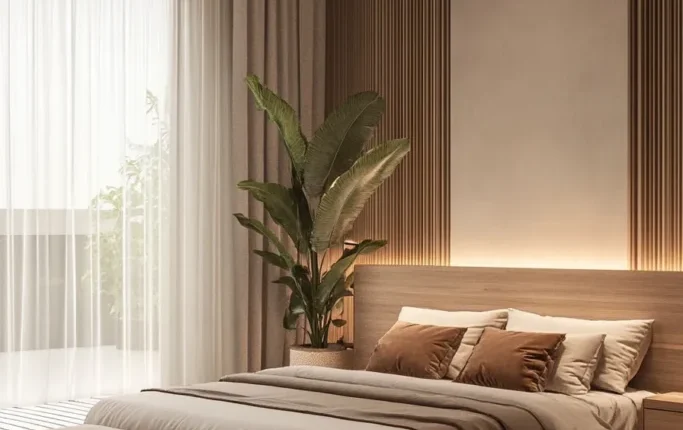
13 Japandi Bedroom Ideas
1. Neutral Color Harmony
Japandi bedrooms begin with a calm, neutral palette that blends Japanese minimalism with Scandinavian warmth. Soft whites, beige tones, muted greys, and light wood shades create a peaceful environment that feels both modern and timeless. This balanced color approach removes visual clutter while allowing natural light to flow freely, making even small bedrooms feel more open, airy, and inviting without overwhelming the senses.
To enhance this harmony, incorporate subtle contrasts using darker wood accents or charcoal textiles. The goal is to maintain simplicity while adding depth and dimension. Linen bedding, cotton curtains, and understated décor help keep the aesthetic grounded. By focusing on a restrained palette, your bedroom becomes a relaxing retreat that promotes rest, mindfulness, and a sense of quiet sophistication aligned with Japandi philosophy.

2. Low-Profile Furniture
Low-profile furniture is a signature element in Japandi design, inspired by traditional Japanese interiors. Platform beds, low nightstands, and minimal seating create a grounded and balanced atmosphere. This design choice visually expands the room by keeping sightlines clear and uncluttered. It also brings a sense of calm, making the bedroom feel more connected to the earth and less dominated by bulky furniture pieces.
Pair low furniture with clean lines and natural materials like oak or walnut for a cohesive look. Avoid ornate designs or heavy embellishments, as simplicity is key. This approach not only enhances aesthetic appeal but also improves functionality by keeping the space easy to navigate. A low-profile layout encourages relaxation and creates a serene sleeping environment ideal for unwinding after a long day.

3. Natural Wood Accents
Natural wood plays a crucial role in Japandi bedrooms, bridging the gap between Scandinavian coziness and Japanese elegance. Light woods like ash, pine, or birch add warmth, while darker tones introduce contrast. Wooden bed frames, side tables, and flooring help ground the space, creating a natural and organic feel that is both soothing and visually appealing without being overly decorative.
To maintain balance, mix wood tones carefully rather than overloading the room with a single shade. Pair wood elements with soft textiles and neutral colors to avoid heaviness. The organic textures bring a sense of nature indoors, promoting tranquility. This connection to natural materials aligns perfectly with Japandi principles, emphasizing simplicity, sustainability, and a calm, clutter-free lifestyle.

4. Minimalist Decor Approach
Japandi design thrives on minimalism, where less truly becomes more. Instead of filling the bedroom with decorative items, focus on a few carefully chosen pieces that serve both function and beauty. Clean surfaces, uncluttered spaces, and intentional placement of décor create a visually calming environment that reduces stress and enhances overall well-being in your daily living space.
Choose items like a single ceramic vase, a framed neutral artwork, or a simple lamp to maintain balance. Each piece should have a purpose and contribute to the overall aesthetic. Avoid overcrowding shelves or walls, as negative space is essential in Japandi interiors. This minimalist approach ensures your bedroom feels peaceful, organized, and effortlessly stylish without unnecessary distractions.

5. Soft, Layered Textiles
Layering soft textiles adds warmth and comfort to the clean Japandi aesthetic. Think linen bedding, cotton throws, and wool blankets in muted tones that complement the neutral palette. These layers create a cozy atmosphere while maintaining the simplicity that defines Japandi design, making the bedroom feel inviting without appearing overly styled or cluttered.
Focus on quality over quantity by selecting durable, natural fabrics that age beautifully over time. Subtle textures, such as woven or slightly crinkled materials, add depth without overwhelming the space. By layering textiles thoughtfully, you can achieve a perfect balance between comfort and minimalism, ensuring your bedroom feels both relaxing and visually harmonious.

6. Functional Storage Solutions
Clutter-free living is essential in Japandi bedrooms, making functional storage a top priority. Built-in cabinets, under-bed storage, and sleek wardrobes help keep belongings organized while maintaining a clean and minimalist look. Hidden storage solutions ensure that everyday items are easily accessible without disrupting the visual flow of the room.
Opt for storage pieces that blend seamlessly with the overall design, such as wooden cabinets with simple handles or handleless designs. Avoid bulky or overly decorative storage units, as they can break the minimalist aesthetic. By prioritizing functionality and simplicity, you can maintain an organized, peaceful bedroom that aligns with Japandi’s focus on mindful living.
7. Nature-Inspired Elements
Bringing nature indoors is a key aspect of Japandi design. Incorporate elements like indoor plants, stone accents, or natural fibers to create a calming environment. Plants such as bonsai, snake plants, or small potted greenery add life to the space while maintaining the simplicity and balance that define Japandi interiors.
Keep the arrangement minimal and intentional rather than overcrowding the room with greenery. A single well-placed plant can have a greater impact than multiple scattered ones. Natural elements not only enhance the aesthetic but also promote relaxation and well-being. This connection to nature reinforces the calming, grounded atmosphere that Japandi bedrooms are known for.
8. Soft Ambient Lighting
Lighting plays a crucial role in setting the mood for a Japandi bedroom. Soft, warm lighting creates a relaxing atmosphere that encourages rest and comfort. Use paper lanterns, simple pendant lights, or bedside lamps with diffused light to achieve a gentle glow that complements the neutral color palette and natural materials.
Avoid harsh, bright lighting that disrupts the calm ambiance. Instead, focus on layered lighting with multiple sources to create depth and flexibility. Dimmable lights can enhance the mood, allowing you to adjust brightness according to your needs. This thoughtful approach to lighting ensures your bedroom remains a serene and inviting space.
9. Simple Wall Art
Wall art in a Japandi bedroom should be minimal yet meaningful. Choose pieces with neutral tones, abstract designs, or nature-inspired themes that complement the overall aesthetic. A single large artwork or a small curated set can add character without overwhelming the space, maintaining the balance between simplicity and style.
Frames should be simple, often in wood or black finishes, to blend seamlessly with the décor. Avoid overly colorful or busy designs that disrupt the calming atmosphere. By keeping wall art understated and intentional, you can enhance the visual appeal of your bedroom while preserving its peaceful and uncluttered feel.
10. Open Space Layout
An open and airy layout is essential for achieving the Japandi look. Avoid overcrowding the room with unnecessary furniture or décor. Instead, focus on creating a spacious environment where each element has room to breathe. This approach enhances the sense of calm and allows natural light to flow freely throughout the space.
Strategically place furniture to maximize functionality while maintaining simplicity. Keep pathways clear and avoid blocking windows or light sources. An open layout not only improves the visual appeal but also contributes to a more relaxing and stress-free environment. This balance of space and function is central to Japandi design principles.
11. Earthy Tone Accents
While neutral colors dominate Japandi bedrooms, adding subtle earthy tones can enhance the overall aesthetic. Shades like terracotta, olive green, or muted brown introduce warmth and depth without overpowering the minimalist palette. These accents can be incorporated through cushions, throws, or small decorative items.
Use these tones sparingly to maintain balance and avoid visual clutter. The goal is to complement the neutral base rather than compete with it. Earthy accents bring a natural, grounded feel to the space, reinforcing the connection to nature that defines Japandi interiors while adding a touch of personality.
12. Handcrafted Decor Pieces
Handcrafted items add authenticity and uniqueness to a Japandi bedroom. Ceramic vases, woven baskets, or handmade wooden pieces bring a sense of artistry and individuality. These elements reflect the Japanese appreciation for craftsmanship and the Scandinavian love for functional design.
Choose a few high-quality handcrafted items rather than filling the room with mass-produced décor. Each piece should feel intentional and meaningful, contributing to the overall aesthetic. This approach not only enhances the visual appeal but also creates a more personal and inviting space that aligns with Japandi values.
13. Calm and Balanced Atmosphere
Ultimately, a Japandi bedroom is about creating a calm and balanced atmosphere that promotes relaxation and well-being. Every design choice, from furniture to décor, should contribute to a sense of harmony. By focusing on simplicity, natural materials, and thoughtful design, you can achieve a space that feels both functional and peaceful.
Maintain this balance by regularly decluttering and reassessing your space. Keep only what you truly need and love, ensuring your bedroom remains a sanctuary. This mindful approach to design encourages a slower, more intentional lifestyle, making your Japandi bedroom a perfect retreat from the demands of everyday life.