
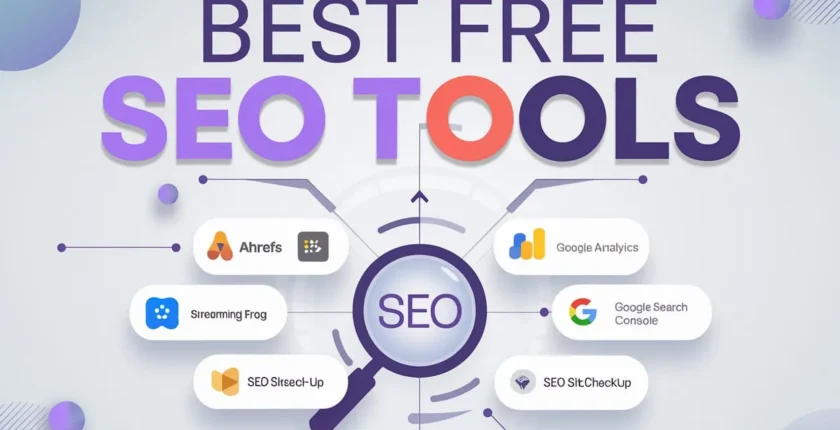
Rank on Google with Free SEO Tools
Rank on Google with Free SEO Tools If you’re a blogger, affiliate marketer, or small business owner, ranking on Google can feel like a slow mystery—especially when everyone keeps recommending expensive SEO tools. But here’s the truth: you can absolutely start ranking using free SEO tools (and many successful bloggers do!). You just need the right strategy, the right keywords, and simple optimization steps you repeat consistently.
In this Pinterest-friendly guide, you’ll learn how to rank on Google using 100% free SEO tools, step-by-step. Each idea includes an image prompt for Pinterest pins, and each section includes exactly two paragraphs.
Find Easy Keywords with Google Autocomplete + “People Also Ask”
Google literally tells you what people are searching for—free. Start by typing your topic in Google search and write down autocomplete suggestions. These are real keyword phrases. Next, scroll to “People Also Ask” and expand questions. Each question is a potential blog section or full article idea. This method helps you target keywords that already have demand.
To rank faster, focus on long-tail keywords like “best budget planner for beginners” instead of “budget planner.” Long-tail keywords have lower competition and higher buyer intent. Make a list of 20–50 keyword ideas using this method before writing. The more targeted your keyword list becomes, the easier ranking feels over time.
Use Google Keyword Planner (Free Keyword Volume + Ideas)
Google Keyword Planner is free inside Google Ads and is one of the most underrated SEO tools. It gives keyword ideas, approximate search ranges, and related queries. You can enter one keyword (example: “meal prep”) and get dozens of real keyword variations. This is perfect for bloggers who want SEO without paying for Ahrefs or SEMrush.
Use Keyword Planner to find keywords that match your niche and audience. Then choose keywords with clear intent, like “how to,” “best,” “cheap,” “for beginners,” and “step-by-step.” These are easier to rank because they answer specific problems. Your goal is not just traffic—it’s targeted traffic.
Check Competition Using Google Search (Manual SEO Hack)
You don’t need paid SEO tools to analyze competition—you can do it manually. Search your keyword on Google and study the top results. If the first page is filled with big websites like Forbes, Healthline, or HubSpot, it may be hard to rank as a new blogger. But if you see small blogs ranking, it’s a green signal.
Also look at the titles. If results are old, short, or not fully matching search intent, you can outperform them. Try to create something more helpful: better headings, clearer structure, updated info, and step-by-step tips. Ranking becomes easier when you pick keywords where you can realistically create “the best answer.”
Optimize Content with Free Yoast/RankMath or SEO Minion
On-page SEO is what helps Google understand your content. Use free plugins like Yoast SEO or RankMath (WordPress) to optimize your post title, meta description, and keyword placement. For Chrome users, SEO Minion is another free tool that checks headings and on-page issues quickly. These tools guide beginners like a checklist.
A simple rule: include your keyword in the title, first paragraph, 1–2 headings, and naturally throughout the article. Don’t overstuff keywords. Keep it human. Also add internal links to related posts and use short, clear headings. Clean structure improves SEO and helps your post feel easier to read—which increases ranking chances.
Improve Headlines Using CoSchedule Headline Analyzer (Free)
Your blog title is one of the biggest SEO ranking factors because it influences clicks. Use the free CoSchedule Headline Analyzer to improve your headlines. It helps you write titles that are clear, emotional, and more clickable. Remember: Google rewards content that gets clicks, stays longer on page, and answers questions well.
Create titles that match search intent. Examples:
“How to Start a Blog in 2026 (Step-by-Step)”
“15 High Protein Breakfasts Under 10 Minutes”
Avoid vague titles like “My Morning Routine.” SEO needs clarity. A better title brings more clicks, and more clicks signal Google that your article is valuable.
Fix Website Issues with Google Search Console (Must-Have Free Tool)
Google Search Console is a free tool that shows how your site performs in Google Search. It tells you which keywords bring traffic, which pages rank, your click-through rate, and if your site has errors. This tool is essential because it gives real data directly from Google, not guesses. Beginners who use it grow faster.
Use it weekly. Check “Performance” to see your top queries, then improve those pages. If a page ranks on page 2, update it with better headings, more details, and stronger intro. Search Console is also helpful for indexing. If a new blog post isn’t appearing on Google, you can submit it manually for faster indexing.
Speed Up Your Site with Google PageSpeed Insights
Google prioritizes fast sites because users hate slow pages. Google PageSpeed Insights is free and tells you what’s slowing down your site—especially on mobile. Many new bloggers lose rankings simply because their site is heavy with uncompressed images, slow themes, or too many plugins. Speed affects SEO, user experience, and conversions.
Fix the basics: compress images, use fewer plugins, and choose a lightweight theme. You don’t need to be perfect—just improve. Even a small speed boost can reduce bounce rate. When people stay on your site longer and click more pages, Google sees your content as valuable and ranks it higher.
Build Backlinks Free with Pinterest + Guest Posts + HARO Alternatives
Backlinks are still one of the strongest ranking factors, but you don’t need paid tools to build them. Pinterest itself can act like a traffic + backlink engine because pins link back to your blog. You can also do guest posting on small blogs in your niche and place a link to your site naturally. These free backlinks build authority.
Another smart move is answering questions on Quora or Reddit with helpful responses linking to your blog post (only when relevant). Over time, these backlinks help Google trust your website more. Backlinks + strong SEO content = faster ranking. Start slow, but be consistent and it compounds.
Conclusion (Pinterest-Friendly Wrap-Up)
You can rank on Google with free SEO tools if you do these consistently:
Find long-tail keywords using Google suggestions
Use Keyword Planner for ideas
Check competition manually
Optimize on-page SEO with free tools
Use Search Console + PageSpeed Insights
Improve headlines + build backlinks